

The Day the Market Was Democratized
How SPY became America’s first exchange-traded fund—and changed the way individual investors could access the market.
On January 22, 1993, a new investment fund began operating with an initial issuance of 150,000 shares.
Its ticker symbol was SPY.
The fund was designed to follow the S&P 500 Index, giving investors exposure to a broad group of large U.S. companies through a single investment. One week later, on January 29, SPY began trading on the American Stock Exchange.
At the time, it was a modest financial experiment.
There was no public frenzy. No wave of consumer excitement. No obvious indication that this new product would help reshape the investment industry.
Yet SPY introduced an idea that now feels ordinary: an investor could buy or sell a fund representing a broad stock-market index during the trading day, using the same brokerage process used to trade an individual company.
That combination was new.
SPY became the first exchange-traded fund listed in the United States. In the decades that followed, the ETF market expanded from one fund into thousands of products covering stocks, bonds, commodities, industries, countries and investment strategies.
The ETF did not remove risk. It did not guarantee good decisions or positive returns.
What it changed was access.
Investing before the ETF
Before ETFs, investors already had ways to participate in financial markets.
They could buy individual stocks through a broker. They could invest in mutual funds. Large institutions could use futures contracts and other specialized instruments to obtain broad market exposure.
But each option had limitations.
An individual who wanted to build a portfolio resembling the S&P 500 would have needed to buy and maintain positions in hundreds of companies. That required substantial capital, many separate transactions and regular adjustments as the index changed.
Mutual funds offered a more practical path to diversification, but traditional mutual fund shares did not trade continuously on an exchange. Investors could place an order during the day, but the transaction was generally completed at a price calculated after the market closed.
Institutional investors had access to more advanced tools, including index futures, but those instruments were not designed as simple long-term holdings for ordinary brokerage accounts.
The ETF brought together features that had previously existed in separate products:
- A pooled portfolio similar to a mutual fund
- The ability to trade throughout the day like a stock
- Exposure to a broad market through one security
- A structure intended to keep the trading price reasonably close to the value of the underlying investments
It was not simply another fund.
It was a different way to package and access a portfolio.
The problem SPY was designed to solve
The development of the first U.S. ETF is often linked to the market disruption of October 1987.
On October 19, 1987—a day remembered as Black Monday—the Dow Jones Industrial Average fell more than 22% in a single session.
The crash forced regulators, exchanges and financial institutions to reconsider how different parts of the market interacted during periods of severe stress.
One issue was the lack of a single exchange-traded security that represented a broad portfolio of stocks.
Futures contracts could provide exposure to a market index, but they were specialized instruments. They were not designed as straightforward investment funds that an individual could hold in an ordinary brokerage account.
The American Stock Exchange began exploring whether a basket of securities could be packaged into one investment that traded on an exchange.
The idea could be expressed in one simple question:
What if investors could trade a broad section of the market almost as easily as they traded one company?
The concept was straightforward. Building a product that could work reliably in real markets was not.
A fund needed to hold securities that closely represented an index. It needed to trade efficiently. It also needed a structure that would prevent its market price from drifting too far from the value of the investments it owned.
State Street worked with the American Stock Exchange to develop the product that eventually became SPY. State Street has described the effort as a multiyear collaboration involving extensive operational testing before the fund launched.
January 1993: SPY enters the market
SPY’s formal name is the SPDR S&P 500 ETF Trust. The initials SPDR originally referred to the Standard & Poor’s Depositary Receipt, and the funds became widely known as “spiders.”
The trust commenced operations on January 22, 1993. Its first day of exchange trading was January 29.
The distinction is worth noting.
January 22 is the fund’s inception date—the day the trust began operating. January 29 was the day investors could first trade its shares on the exchange.
SPY was not necessarily the first ETF-like product anywhere in the world. Earlier exchange-traded portfolio products had been attempted, including products in Canada and the United States.
But SPY is recognized as the first successful U.S.-listed ETF and the product that established the modern American ETF market.
Its purpose was clear: to provide investment results that generally corresponded, before expenses, to the performance of the S&P 500 Index.
For investors, that meant something important.
Instead of purchasing hundreds of individual companies, an investor could buy one security designed to represent a broad group of large U.S. businesses.
That was a significant reduction in complexity.
What an investor was actually buying
When an investor bought one share of SPY, that person did not directly become the registered owner of a tiny piece of every company in the S&P 500.
The investor owned a share of a trust that held a portfolio designed to reflect the index.
The same basic principle applies to ETFs today.
An ETF pools money from investors and owns a collection of investments. Depending on the fund, those holdings may include stocks, bonds or other assets.
Each ETF share represents a proportional interest in that portfolio.
Consider a simplified example.
Suppose a fund owns shares in 100 companies. An investor who buys one share of the fund does not need to place 100 separate orders. The fund manages the underlying portfolio, while the investor owns a tradable share of the fund.
This made broad market exposure more practical.
It did not make it risk-free.
If the companies in the portfolio declined in value, the fund could decline as well. An ETF changed the way investors accessed the market. It did not protect them from the market’s movements.
Why the ETF structure mattered
The ETF introduced an unusual combination.
It behaved like a fund because it held a portfolio of investments. But it also behaved like a stock because investors could buy and sell its shares throughout the trading day.
That flexibility gave the product broad appeal.
Institutional investors could use SPY to adjust market exposure efficiently. Traders could use it for shorter-term positioning. Long-term investors could hold it as part of a diversified portfolio.
The ETF did not prescribe a single investing philosophy.
It was a tool.
Whether that tool supported patient wealth building or unnecessary trading depended on how the investor chose to use it.
The deeper mechanics that allow ETF shares to be created, redeemed and kept reasonably aligned with the value of their holdings are important. They deserve their own explanation.
For most investors, however, the central idea is simpler:
An ETF allows many investments to be packaged into one security that can be bought and sold on an exchange.
That idea helped change investing.
Was the market truly democratized?
The word democratized should be used carefully.
SPY did not make wealth equally available to everyone.
It did not solve differences in income, access to financial education or the ability to save. In 1993, brokerage commissions were still substantial, online trading was not widespread and many households had limited access to investment markets.
SPY also did not invent index investing. Index mutual funds already existed.
What SPY changed was the format.
It made a broad index portfolio available as an exchange-traded security.
An investor with a brokerage account could:
- Buy or sell the fund during market hours
- See a quoted market price
- Use the same types of orders used for stocks
- Gain exposure to many companies through one position
- Hold the investment for a day, a year or several decades
That represented a meaningful expansion of access.
The innovation was not that investors could suddenly predict the market or avoid losses.
It was that participating in a broad segment of the market became simpler.
The ETF did not promise equal outcomes.
It reduced an important practical barrier.
Why SPY mattered to individual investors
SPY’s earliest users were not limited to small investors. Institutional investors quickly recognized that the fund provided a convenient way to gain exposure to large U.S. companies.
Over time, the same structure became increasingly useful to individuals.
One trade could provide broad exposure
An investor no longer had to select individual winners to participate in the performance of a large group of companies.
This did not guarantee a gain. It did reduce the work involved in constructing a broad portfolio stock by stock.
Prices were visible throughout the day
Unlike traditional mutual funds, which generally complete transactions at an end-of-day price, ETFs could be bought and sold at prevailing market prices during the trading session.
That gave investors greater control over when and how they placed an order.
ETFs fit into ordinary brokerage accounts
An investor could hold an ETF alongside stocks, bonds and other securities in the same account.
No separate arrangement was required for each fund provider.
The structure could be applied to other markets
Once SPY demonstrated that an index portfolio could trade successfully as one security, the model could be extended.
That eventually opened access to far more than the S&P 500.
From one ETF to thousands
The industry did not transform overnight.
SPY began modestly. But over the following decades, financial firms introduced ETFs covering:
- Broad U.S. stock markets
- Small and midsize companies
- International markets
- Government and corporate bonds
- Real estate
- Commodities
- Industries and sectors
- Factor-based strategies
- Actively managed portfolios
By June 2025, U.S. ETF assets had reached approximately $11.5 trillion, according to the Investment Company Institute. The number of U.S.-registered ETFs had grown to nearly 4,000.
ETF ownership also became more common among households. ICI estimated that 16.9 million U.S. households owned ETFs in 2024, up from approximately one million in 2005.
Those figures show how far the structure moved from its experimental beginnings.
They do not mean every ETF is suitable for every investor.
The industry now includes low-cost, broadly diversified funds. It also includes narrow, leveraged, inverse and highly specialized products.
Two investments can both be called ETFs while carrying very different risks.
The structure became more accessible.
The responsibility to understand the investment remained with the investor.
What ETFs changed—and what they did not
SPY changed the mechanics of investing more than the principles of investing.
It made it easier to buy a diversified market exposure. It did not change the importance of patience, cost awareness, risk tolerance or financial planning.
ETFs expanded access
Investors could reach broad markets, industries, countries and asset classes through securities traded in brokerage accounts.
ETFs increased choice
Thousands of funds now offer exposure to different markets and strategies.
That choice can be useful, but it can also be confusing.
ETFs helped increase cost competition
As index ETFs expanded, fund providers competed aggressively on expense ratios and other costs.
Lower costs can help investors retain more of their returns over time, although an ETF’s expense ratio is not its only cost.
ETFs did not remove market risk
A low-cost ETF can still lose substantial value.
A fund holding hundreds of securities can still be concentrated in one country, industry or group of large companies.
A bond ETF can decline. A thematic ETF can fail. A diversified fund can still experience long periods of weak performance.
ETFs did not make frequent trading necessary
The ability to trade throughout the day does not mean long-term investors benefit from doing so.
For many people, a suitable asset allocation, manageable costs and consistent contributions may matter more than reacting to short-term market movements.
Lessons from SPY for today’s investor
The history of SPY offers several enduring lessons.
Start with what the fund owns
An ETF is a container.
Before investing, understand what is inside it.
Which securities does it hold? What market does it represent? How are those holdings selected? What risks are likely to drive its performance?
A familiar ticker does not replace that analysis.
Simplicity can be powerful
SPY addressed a complicated investment problem with a simple investor experience: one security representing a broad portfolio.
Good investment tools often simplify implementation without pretending that markets themselves are simple.
Flexibility is not a strategy
An ETF can be traded throughout the day.
That does not tell an investor when to buy, how much to invest or how long to hold.
Those decisions should reflect the investor’s goals, time horizon and ability to tolerate losses.
Diversification has limits
SPY provides exposure to large U.S. companies in the S&P 500.
It does not represent every U.S. company, every international market, every asset class or every source of risk.
No single ETF is automatically a complete financial plan.
From easier access to better decisions
The ETF revolution gave investors more control over how they access financial markets.
That control created a new challenge: choice.
With thousands of ETFs now available, investors must distinguish between products that appear similar, understand unfamiliar terminology and determine whether a fund actually belongs in their broader plan.
More access does not automatically produce better decisions.
Investors still need clear information. They need to understand costs, risks, holdings and trade-offs. They need to separate useful evidence from marketing claims and short-term noise.
That is where financial education matters.
Evolty is being developed to help individual investors better understand ETFs, market conditions and the information behind investment decisions.
The objective is not to encourage speculation or promise returns.
It is to make ETF investing easier to understand, so people can evaluate opportunities with greater clarity and discipline.
SPY helped make the market more accessible.
The next step is helping investors use that access thoughtfully.
Key takeaways
SPY commenced operations on January 22, 1993, and began exchange trading on January 29.
It became the first successful U.S.-listed ETF and helped establish the modern American ETF market.
SPY allowed investors to gain exposure to the S&P 500 through one tradable security instead of purchasing hundreds of individual stocks.
ETFs expanded access, flexibility and investment choice, but they did not eliminate risk or replace the need for a financial plan.
For long-term investors, the essential questions remain the same:
What does the fund own? What does it cost? What risks are involved? And how does it fit into your broader goals?
Frequently asked questions
What was the first ETF in the United States?
The SPDR S&P 500 ETF Trust, known by its ticker SPY, is recognized as the first successful ETF listed in the United States.
When was SPY created?
SPY commenced operations on January 22, 1993. Its first day of exchange trading was January 29, 1993.
What does SPY invest in?
SPY seeks to follow the performance of the S&P 500 Index, which represents a group of large U.S. companies.
Is SPY the same as the S&P 500?
No.
The S&P 500 is an index. SPY is an investment fund designed to track that index.
An investor cannot directly purchase an index but can invest in a fund that seeks to follow it.
Are ETFs safer than individual stocks?
Not automatically.
A broadly diversified ETF may reduce the company-specific risk of owning only one or a few stocks. But the ETF remains exposed to the risks of the market, sector or strategy it represents.
Does an ETF guarantee diversification?
No.
Some ETFs hold hundreds or thousands of securities. Others focus on a narrow industry, country or investment theme.
Investors should examine the actual holdings rather than relying only on the ETF label.
A final perspective
The importance of SPY is not found in one day’s return or one company’s success.
It is found in an idea.
A broad investment portfolio did not have to be assembled one stock at a time or held only inside a traditional mutual fund. It could trade on an exchange as a single, accessible security.
From an initial issuance of 150,000 shares, that idea grew into a major part of the financial system.
The ETF gave investors a simpler way to reach the market.
It did not tell them what to do once they arrived.
That still requires education, judgment and a clear understanding of risk.
References
- U.S. Securities and Exchange Commission, SPDR S&P 500 ETF Trust financial statements and prospectuses. Documents the trust’s January 22, 1993 commencement of operations, initial issuance and first trading date.
- State Street Investment Management, How SPY Reinvented Investing: The Story of the First U.S. ETF. Historical account of SPY’s development and early adoption.
- U.S. Securities and Exchange Commission, Investor.gov, Exchange-Traded Funds. Explains ETF ownership, structure and risks.
- Investment Company Institute, A Close Look at Exchange-Traded Funds and Their Investors, September 2025. Provides data on U.S. ETF assets, fund growth and household ownership.
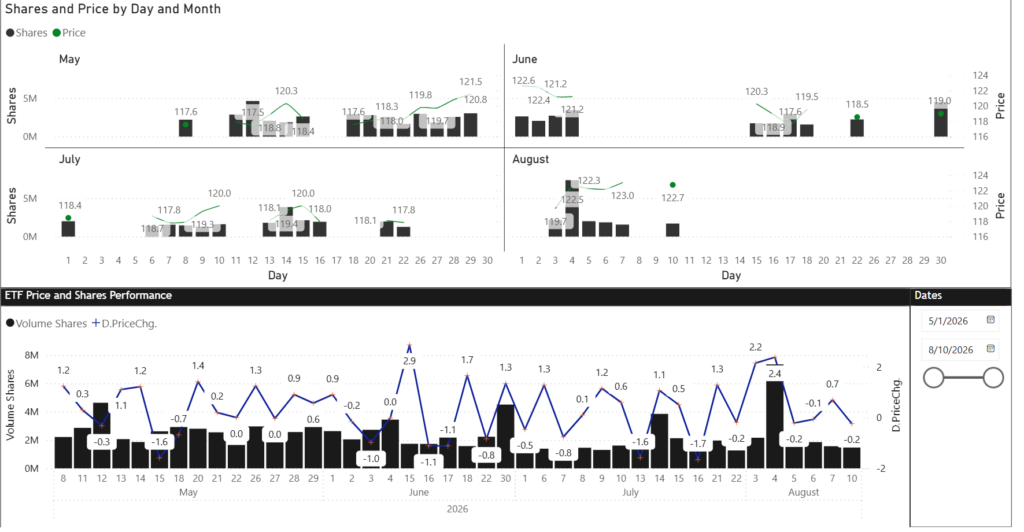
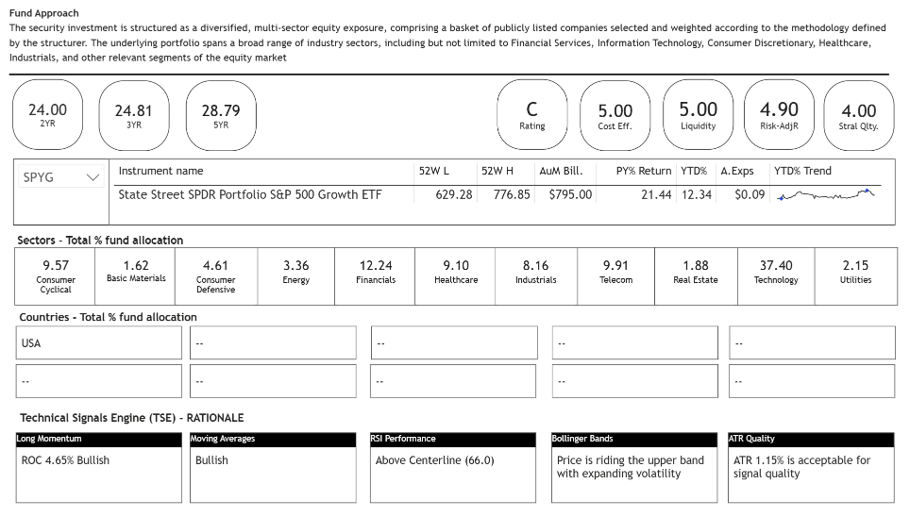
SPY Prospectus. Actual performance, analysis, instrument rating based in a technical signals engine.
Want to go deeper?
We explore how SPY transformed the way investors access the stock market—and how one ETF helped reshape global investing—in the second episode of The Wealth Journey.
🎙️ Listen to the full episode on Spotify:
How SPY Rewired the Global Stock Market
And if you’re researching ETFs, Evolty is designed to help you look beyond the ticker and better understand what you’re actually buying.
Explore Evolty →
Evolty
This article is provided for educational and informational purposes only. It does not constitute personalized investment, tax or legal advice, or a recommendation to buy or sell any security. All investments involve risk, including the possible loss of principal.